SBX2 ATIS
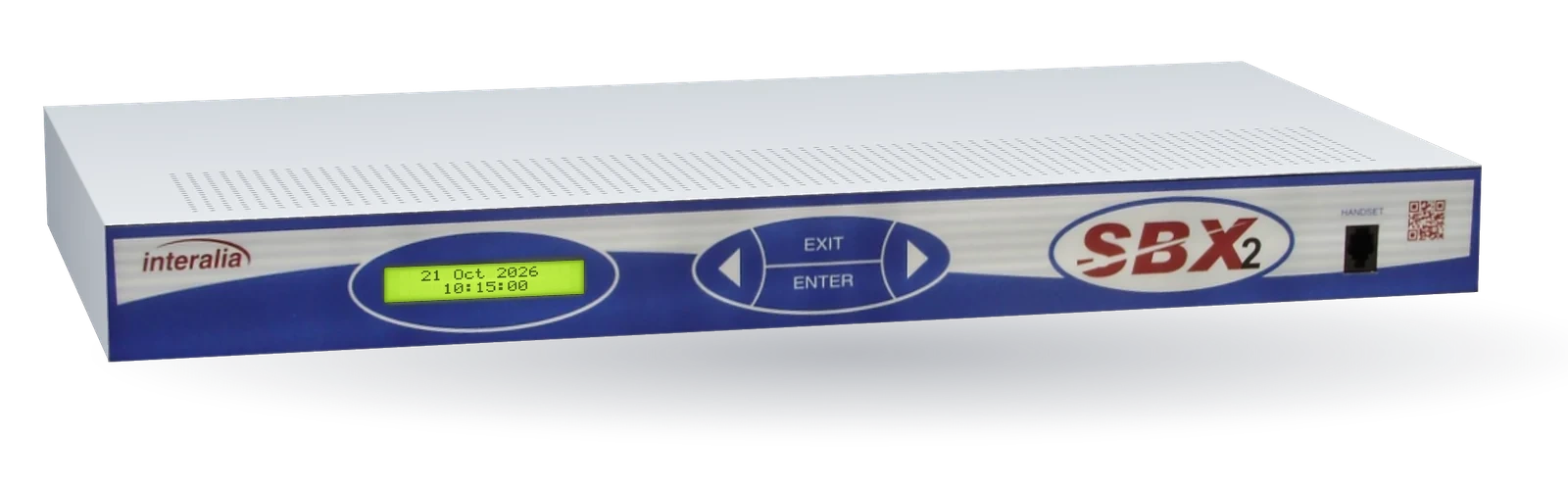
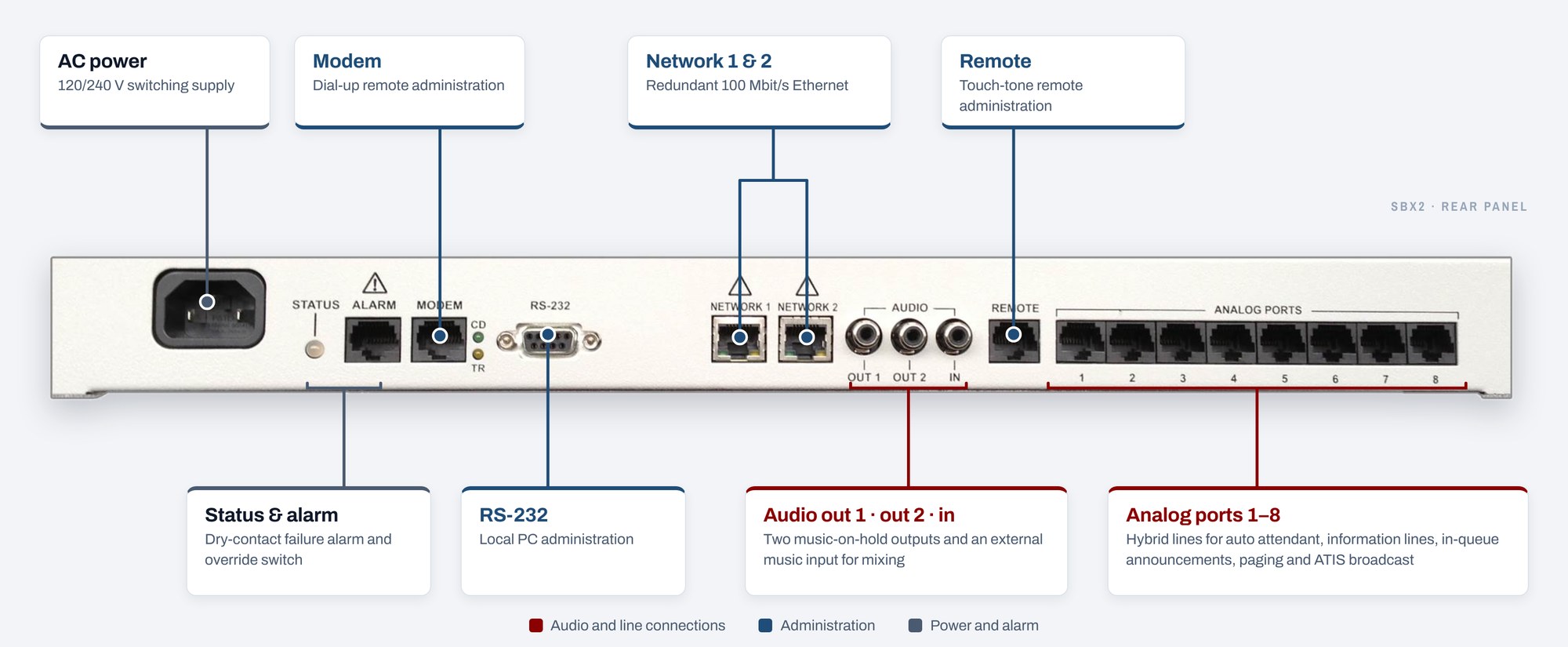
One rack unit. Eight configurable ports, sixty minutes of audio and up to 999 messages — enough to feed the transmitter, a public information line and a second-language channel from a single chassis.
Record a new cycle from the front-panel handset, over the phone, or by uploading prepared audio with XMUCOM+. The broadcast never stops while you do it, and everything survives a power outage.
Built around the way a tower actually works.
Record three ways
Front-panel handset for the person standing at the rack, remote phone access for the person who is not, and file upload for audio prepared elsewhere.
No gap in the broadcast
The replacement cycle goes live at the message boundary. Nobody hears dead air while the next information letter is being recorded.
Rides out the power cut
Messages and configuration are retained through a loss of power and come back on restore without anyone driving to the field.
More than one language
Assign ports independently and run simultaneous broadcasts on separate channels where bilingual service is required.
Local or remote administration
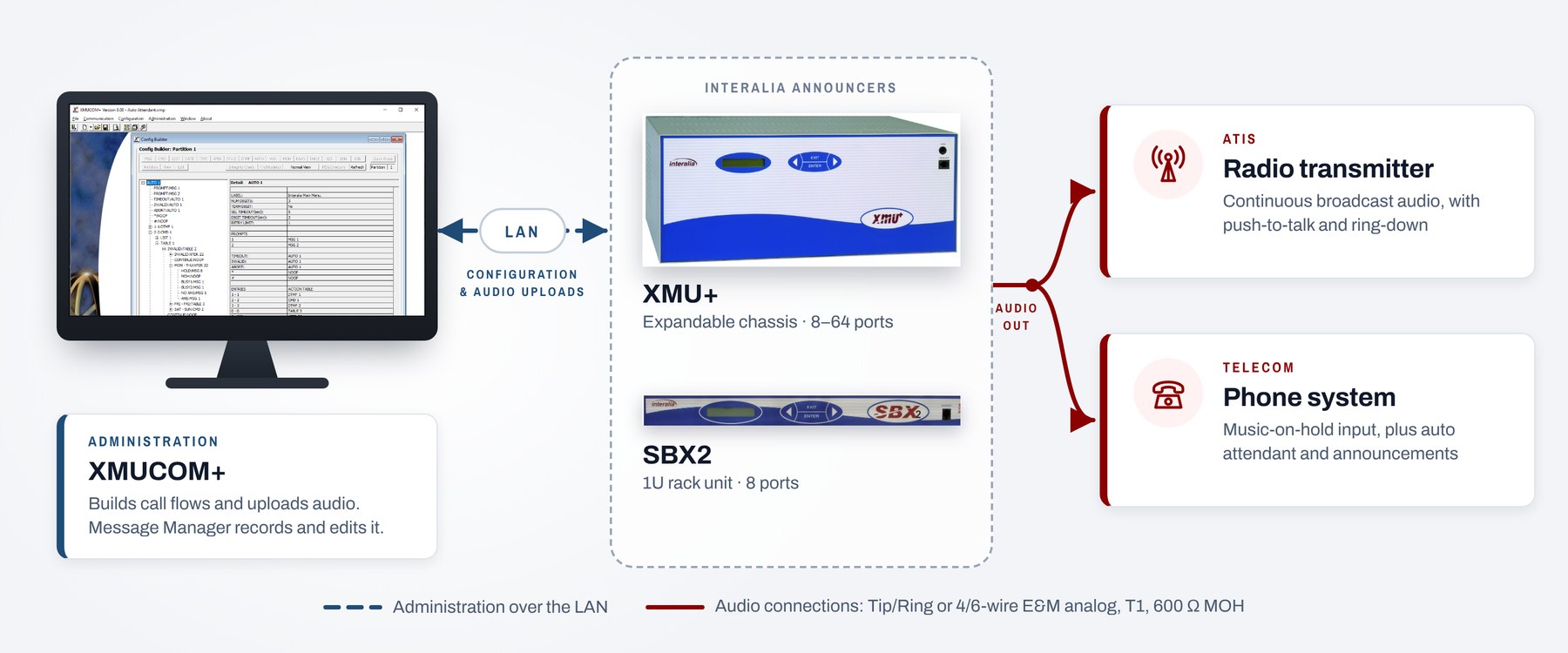
Configure at the front panel, over the network with XMUCOM+, or by dialling in. Message Manager handles audio editing on the workstation.
Not only ATIS
The same chassis runs auto attendant, call-centre queue, dial-by-name, information lines and music-on-hold for the terminal side of the building.
The whole sheet, on the page.
No gated PDF between you and the numbers you need to size an install.
XMUCOM+ runs on Windows and needs a sound card for Message Manager. If that is a problem for your IT department, the SBX3 replaces it with a browser-based interface — see the preview →
Everything to rack it and run it.
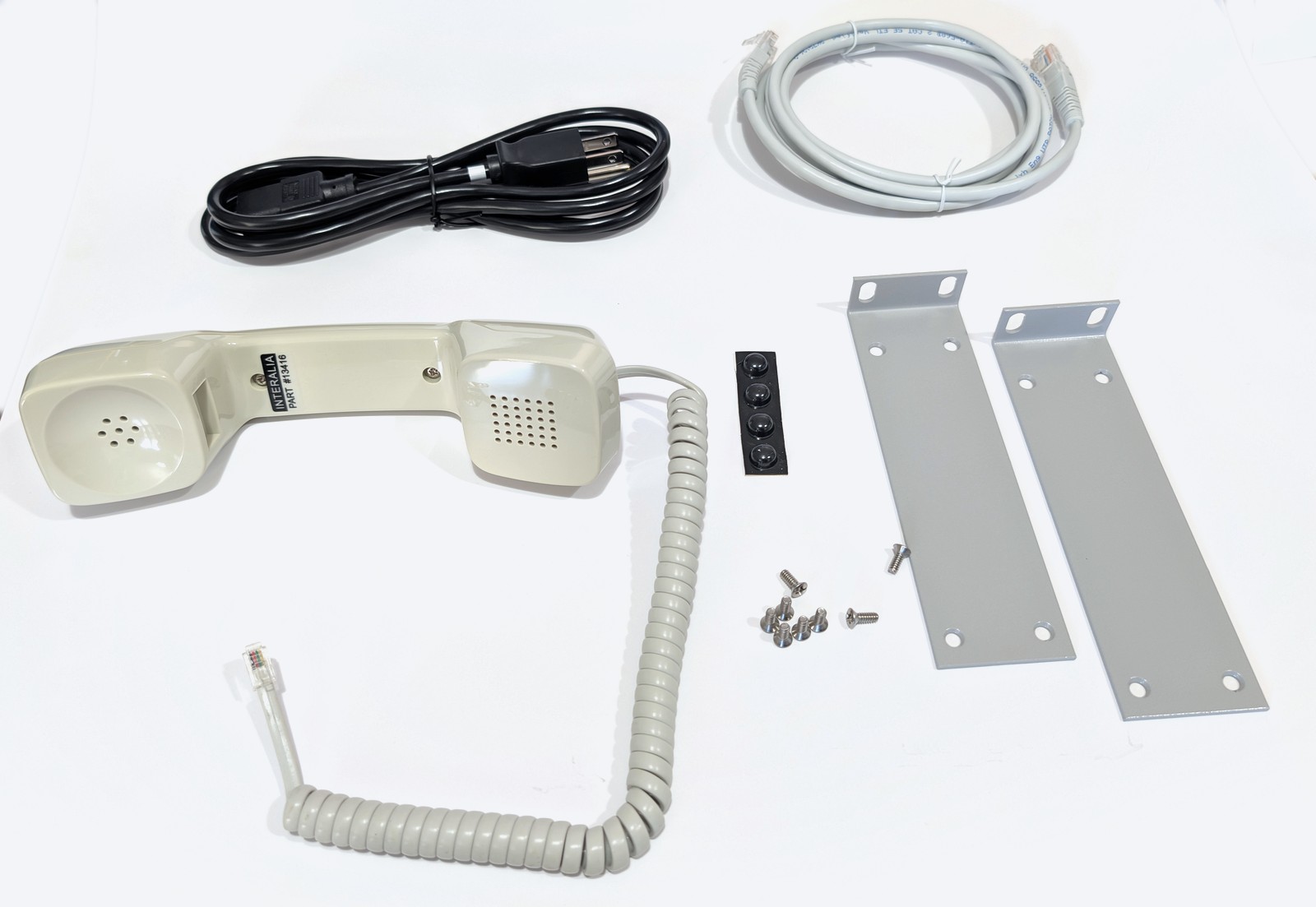
Every SBX2 ships with an accessory kit, so it can go straight into the rack and onto the network.
The SBX2 kit includes the small brackets made for its 1U chassis.
How to buy an SBX2
ATIS configurations are quoted rather than carted — the port assignment, handset option and any integration work depend on the field. Tell us the site and we will come back with a part list.
Non-ATIS SBX2 configurations and accessories are available in the online store.
Announcement and messaging hardware, designed and built in Canada since 1975.
Vernon, BC V1H 2K54786 1st Ave South, Suite 102
Seattle, WA 981341-800-661-9406